

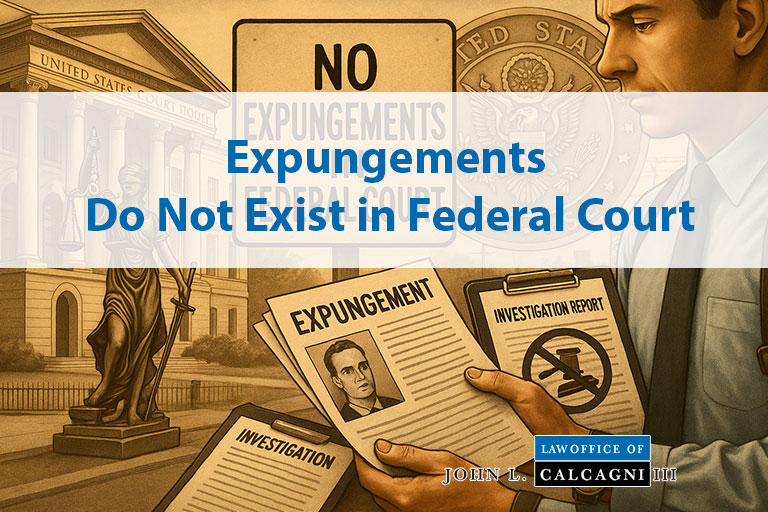
Expungements Do Not Exist in Federal Court
Contents
Understanding Expungement and Its Variability by Jurisdiction
Expungement is a legal term that refers to the destruction or erasure of records related to a criminal conviction. To obtain expungement of a criminal record or conviction, an applicant must present either a motion or petition to the Court where the conviction occurred.
Laws related to the expungement of criminal records vary by jurisdiction and do not exist in every state. Where expungements laws do exist, the requirements to successfully obtain expungement of a criminal conviction may also vary. As such, applicants are encouraged to consult with an attorney to assist with the expungement process.
Why Federal Courts Cannot Order Expungements
Contrary to popular belief, expungements do not exist in federal courts. This is because federal courts lack jurisdiction, or legal authority, to order the expungement or destruction of a federal criminal record. Federal courts may only adjudicate those matters over which is has subject matter jurisdiction, as authorized by either the laws enacted by Congress or the United States Constitution.
A plain reading of the federal constitution makes no mention or reference to the expungement of criminal records. Similarly, the United States Code, or federal criminal statutes, do not provide for an expungement process. As a result, the federal courts presently have no power to order the destruction of criminal records or convictions.
Collateral Consequences of a Federal Criminal Record
It is well-known how the mere existence of a public criminal record may prejudice a defendant in various walks of life. A criminal record may hinder defendants from acquiring employment, housing, educational financial aid, and more. A criminal conviction may also adversely affect other civil rights such as the rights to firearm ownership and/or possession, to run for public office, and to vote.
Convictions may also preclude immigrants from acquiring lawful immigration status such as residency and naturalization of citizenship. In the federal criminal justice system, the only protection against these collateral consequences of a criminal conviction is a successful trial defense.
Once convicted of a federal crime, the record(s) related thereto shall remain in existence, permanently and forever, unless and until Congress enacts a federal law that creates a procedure for the expungement of federal criminal records.
Contact an Attorney for Guidance
If you have questions about your ability to expunge a criminal record or conviction, please contact Federal Crimes Defense Lawyer, John L. Calcagni III for a free consultation at (401) 351-5100.