

Do Criminal Defense Lawyers Offer Payment Plans for Legal Services?
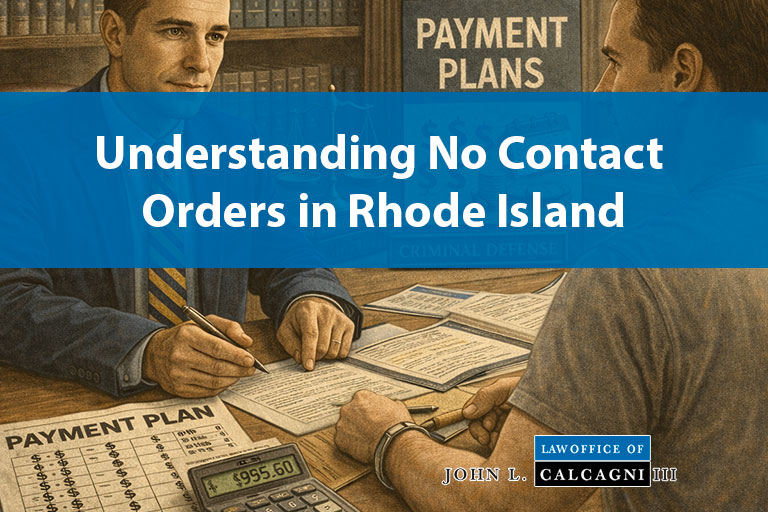
Many clients often ask if criminal defense lawyers offer payment plans, as a way to finance legal services. This article addresses the subject of payment plans, in order to better educate clients and family members about this important topic.
Contents
Attorney Discretion and Ethical Considerations
Whether or not to offer a payment plan is left to the discretion of the criminal defense attorney who is being sought after for legal representation. At this time, there are no known laws or rules that prohibit lawyers from allowing clients to pay over time for legal representation.
However, lawyers who choose to offer payment plans must still abide by the ethical rule pertaining to legal fees, which requires that legal fees be reasonable. A lawyer may charge a fair fee for her or her services, which may be based upon various factors to include, but not limited to the lawyer’s practice area, experience level, geographic location, complexity of legal matters, and much more.
Financial Risks for Lawyers Without Collateral
Clients and lawyers who elect to enter into a payment plan fee arrangements should be mindful of some potential concerns. First, a lawyer who elects to accept payments over time will have no collateral or security to secure the debt for unpaid legal services.
Hiring a lawyer is much different than obtaining a mortgage for a home or an automobile loan. In these other financial arrangements, the bank or lender will place a lien on the financed home or automobile to secure the debt. If the borrower fails to make payments, as required, the lender can foreclose on the real estate or repossess the vehicle.
The property may then be sold or auctioned for money, thereby protecting the bank from any financial loss. If a lawyer elects to offer a client a payment plan, and the client fails to make the required payments, there is no collateral that can be foreclosed upon or repossessed.
This means the lawyer stands to lose his or her time and resources, expended on legal services, in the event of lack of payment. This risk may dissuade lawyers from offering payment plans, especially if the lawyer has had the unfortunate past experience of providing legal services to a client who failed to pay his bill.
Impact on Legal Representation and Ethical Challenges
Second, lawyers who both are paid in installments and are concerned with lack of payment may hold back on the performance or delivery of the required legal services, until full payment is made. This means the client may not receive the proper representation at the time and manner required.
Some lawyers may not be able to financially afford to deliver the necessary services if their efforts cannot be met contemporaneously with adequate compensation. This may force lawyers to take on too much work, or to overextend themselves to other clients who have the ability to pay.
After all, private attorneys are in the business of delivering legal services in exchange for money. This places the lawyer in an ethical quandary, and the client in a precarious situation, that must be avoided at all costs. Perhaps this is a reason why lawyers and clients should avoid payment plan arrangements, whenever possible.
Withdrawal Risks in Criminal Cases
Third, payment plans are risky for lawyers. This is due, in part, to the procedural rules that apply in criminal cases. When a criminal defense lawyer is hired to represent a client, he or she must file an entry or notice of appearance with the court where the legal matter is pending.
If, before the legal matter concludes, an attorney wishes to sever a professional relationship with a client, counsel must file a motion to withdraw with the court where the appearance was filed. In the case of non-payment, lawyer may wish to withdraw from further representing the non-paying client.
When the motion to withdraw is filed, the decision to deny or grant it falls within the judge’s discretion. Some judges may deny the motion, whereas others may grant it. If a motion to withdraw for non-payment is denied, the lawyer will be forced to continue working on the case for free. Again, this places the parties in an awkward position, which may be avoided by not entering into payment plan arrangements.
Payment Plan Flexibility and Best Practices
Most criminal defense firms in Rhode Island, including the Law Office of John L. Calcagni III, Inc., do not have any fixed policies in favor of or against payment plans. Clients who agree to pay larger legal fees, such as in serious felony cases, are often given more time to pay their legal fees compared to those clients who are paying smaller fees associated with defending misdemeanor allegations.
Clients who wish to pay over time should reflect on their financial resources, streams of income, and how much time is needed to pay for the desired legal services. Only then should a client offer and commit to paying over time, in a manner that is agreeable to both parties.
The terms of any payment plan (timing, frequency, and amounts of payments) should also be reduced to writing in order to promote predictability and accountability to the both the lawyer and the client. This way, if non-payment triggers the lawyer to file a motion to withdraw, there will be no misunderstanding by the client as to why.
Contact Information for Legal Assistance
If you have questions about this article, please contact Attorney John L. Calcagni, III at 401-351-5100 to request a free consultation.